
Family Recipe Central Blog
Anna Olson Shares Her Treasured Family Recipe - Creamy Potato PierogiesSubmitted by editor on December 5, 2012 - 3:19pm
Pierogi are traditional peasant food and a staple part of Polish family cooking culture. You'll also find Pierogi are popular in other Eastern European countries including Slovakia, Russia, Romania, Czech Republic and the Ukraine. The traditional Polish handmade dumpling is made with unleavened dough shaped into a semi-circle. The filling is made from cooked potatoes, a white curd-like cheese and stir-fried onion, similar in consistency to mashed potatoes. Many regard Pierogi as the national Polish dish. In Poland each year, they hold the annual Pierogi festival in Krakow where eager Pierogi fans consume more than 30,000 Pierogies each day. |
A Recipe for Learning: Family Safety, Nutrition & CookingSubmitted by DanGilbert on September 27, 2011 - 7:32am
The kitchen, with all of its hot surfaces and pleasing aromas, can be both a highly fascinating as well as a highly dangerous place to be, particularly for small children. This certainly does not mean the kitchen should be off limits. Preschool children have growing minds making it easy for them to learn new concepts. Time spent in the kitchen as a family is a great bonding activity that can be appreciated by both adults and children alike. Dr. Mary Zurn, vice president of education for Primrose Schools, says kitchen time can be a great way for families to regain some lost, but valuable, family time.
Engaging children, even preschool aged children, can be beneficial in many ways. Simple tasks like mixing batter, or rolling dough will help a child’s hand eye coordination develop. However, skills such as following directions, taking responsibility and learning time management can also be taught to children. Other than basic and complex skills, children can also be taught nutritional concepts. Cooking or baking is an easy way for youngsters to learn the importance of eating healthy. |
Cashew Extract May Help Prevent Type 2 DiabetesSubmitted by editor on July 22, 2010 - 11:37am The following article was submitted by Linda Miller who writes for Diabetic Cookbook ... School of Montreal researchers recommend us one good way cashew extract may treat type 2 diabetes.New research published in the journal Molecular Nutrition and Food Research advises cashew seed extract may play an important role in preventing and treating diabetic issues.
Scientists at the College of Montreal and the University of Yaoundé in Cameroon analyzed how cashew products affected the responses of rat liver cells to insulin. In Canada, over three million Canadians have diabetes and this number is expected to reach 3.7 million by 2020, according to the Canadian Diabetes Association. In U.S.A, according to the American Diabetes Association, from the 2007 National Diabetes Fact Sheet, there are total 23.6 million children and adults in the United States - 7.8% of the population - have diabetes. 1.6 million new cases of diabetes are diagnosed in people aged 20 years and older each year. Scientists looked at cashew tree leaves, bark, seeds and apples. They found that only the cashew seed extract increased the absorption of blood sugar by the cells. |
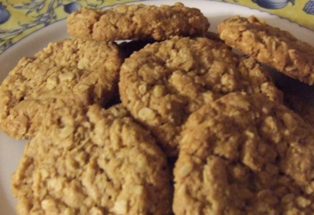
How Will You Celebrate National Oatmeal Cookie Day?Submitted by editor on April 29, 2010 - 11:40am Are you surprised? Didn't know today (April 30th) is National Oatmeal Cookie Day? That's OK, you're probably not alone. Unless you're really tuned into oatmeal cookies.
For example, our US Congress, by Senate Joint Resolution 193, designated March 6th (in 1984) as "Frozen Food Day", and requested the President, then Ronald Reagan, to issue a proclamation for this occasion. In Proclamation #5157, President Ronald Reagan declared: "Now, therefore, I, Ronald Reagan, President of the United States of America, do hereby proclaim March 6, 1984, as Frozen Food Day, and I call upon the American people to observe such day with appropriate ceremonies and activies". And so it goes ... Now, you probably won't track down an official proclamation for "National Oatmeal Cookie Day" by a US president. However, this food holiday has been celebrated for many years, and there is plenty of documentation to support that National Oatmeal Cookie Day does really exisit. |
Is it Parmesan or Parmigiano?Submitted by recipebob on March 27, 2010 - 5:50pm I must admit, we take the cooking and food vocabulary that we use and hear every day for granted. At least, that's the case for me. And so it is for Parmesan as in Parmesan Cheese. I was playing around with a recipe the other day that called for Parmigiano-Reggiano cheese. And I had to pause with a brief pondering question "what's the difference between Parmesan and Parmigiano or Parmigiano-Reggiano cheese"? It occured to me that I've been buying and using these cheeses for years and I've never stopped to understand the difference. In fact, I've probably been mistaken in my assumption that these are just different names for the same cheese. Well, to some extent, that may be true, but it's a bit more complicated than that as I've come to learn. OK, some of you (maybe many of you) are probably saying at this point, this one's pretty obvious. Of course, Parmesan is simply the French version of Parmigiano which is Italian. So are these just the French and Italian language equivalents for the same cheese? Not so fast.
|
Recipe Ingredients Feature ImprovementSubmitted by editor on March 13, 2010 - 10:08am
More continous improvements at Family Recipe Central While some of the adjustments, fixes and enhancements that we make at Family Recipe Central might seem small and insignificant, sometimes these minor improvements make a big difference for our users. One of the frequent questions submitted to our support team is "how to have duplicate ingredient items" in the ingredients section of a recipe. Seems reasonable enough, but this has been a limitation in our system up until now. For example, let's say you have a recipe that has two sections, a fish preparation, and a sauce that is served over the fish. You might want your ingredients list to look something like this ...
Ingredients Fish
Sauce
Previously, the problem that you would bump into has been our limitation on duplicate ingredients. In this case, the sea salt in the Sauce section is flagged as an error because it's a duplicate ingredient entry of the sea salt in the Fish section. |
New Family Cookbook How-to Get Started GuideSubmitted by editor on March 4, 2010 - 9:11am We've just added several new get-started guides all about how to create your family cookbook. If you're wondering how to use the cookbook and recipe publishing system at Family Recipe Central to create your family cookbook, be sure to see these helpful tutorials ... |
Improvements to Recipe Editing and Recipe IngredientsSubmitted by editor on February 28, 2010 - 10:06am We've made a few adjustments to the Recipe editing module at Family Recipe Central that our users will want to know about.
Recipe Ingredients - Reordering the Ingredients List
|
Thin Crust Pizza Dough - Video Step by Step InstructionSubmitted by editor on February 7, 2010 - 10:51am Pizza is definitely a popular convenience food. And while it may seem easier to have that pizza delivered from your local pizza shop, you may not realize that homemade pizza dough is really not that difficult to prepare. If you're a pizza fan, nothing quite compares to a fresh, homemade pizza! |
Cooking Up a Glossary of Cooking Terms at Family Recipe CentralSubmitted by editor on January 31, 2010 - 12:03pm See our newly added "Glossary of Cooking Terms" under the "Help" section at Family Recipe Central. It's a modest collection of cooking terms at the moment, with about 60 entries or so. We'll continue to add cooking terms and definitions on an ongoing basis, but it's a nice start to kick off the section. |
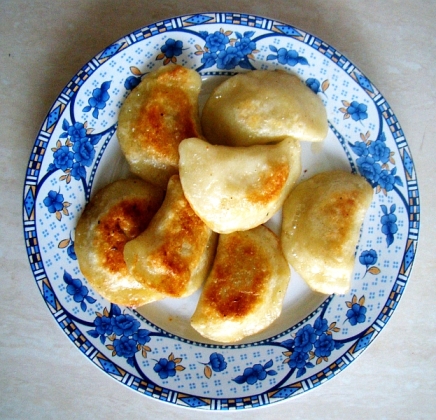 If you have any Polish ancestry, you're probably more than familiar with Pierogies. These are scrumptious little dumplings made from unleavened dough and typically stuffed with a potato and cheese based filling.
 It turns out, almost every day of the year is a